
The Building
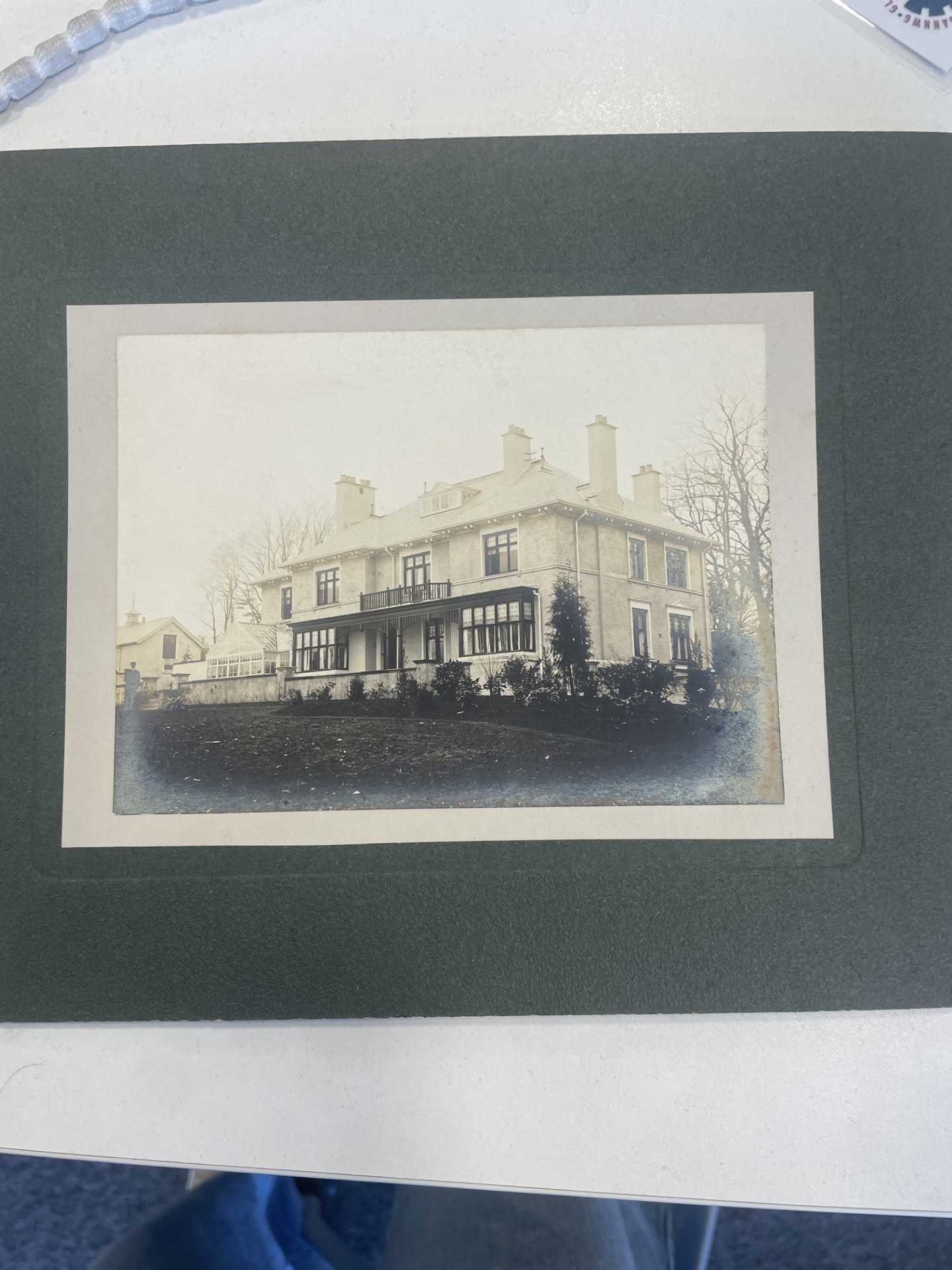
Built in 1899. Grade II listed.
More than 125 years of stories.
Coed Parc is a remarkable historic building in Bridgend with a story that stretches across more than a century. Built at the end of the nineteenth century, it has been a family home, a place of wartime activity, a building connected with the South Wales steel industry and, for many years, a centre for the Mid Glamorgan County Library Service.
Today, Coed Parc is entering another chapter. We are undertaking a careful programme of restoration, working with architects, engineers, conservation specialists and skilled craftspeople to protect the building's historic character and give it a sustainable future.
“This is not simply the restoration of a building. It is the preservation of a piece of Bridgend's history.”
The History
A house with more than
125 years of stories
Coed Parc was built in 1899 for Samuel Llewellyn. Over the decades, the building has changed hands, changed purpose and adapted to a changing world — from a Victorian family residence to a wartime headquarters, a centre for the South Wales steel industry, and a beloved public library.
Each chapter has left its mark. Explore the full timeline from 1899 to the present day.
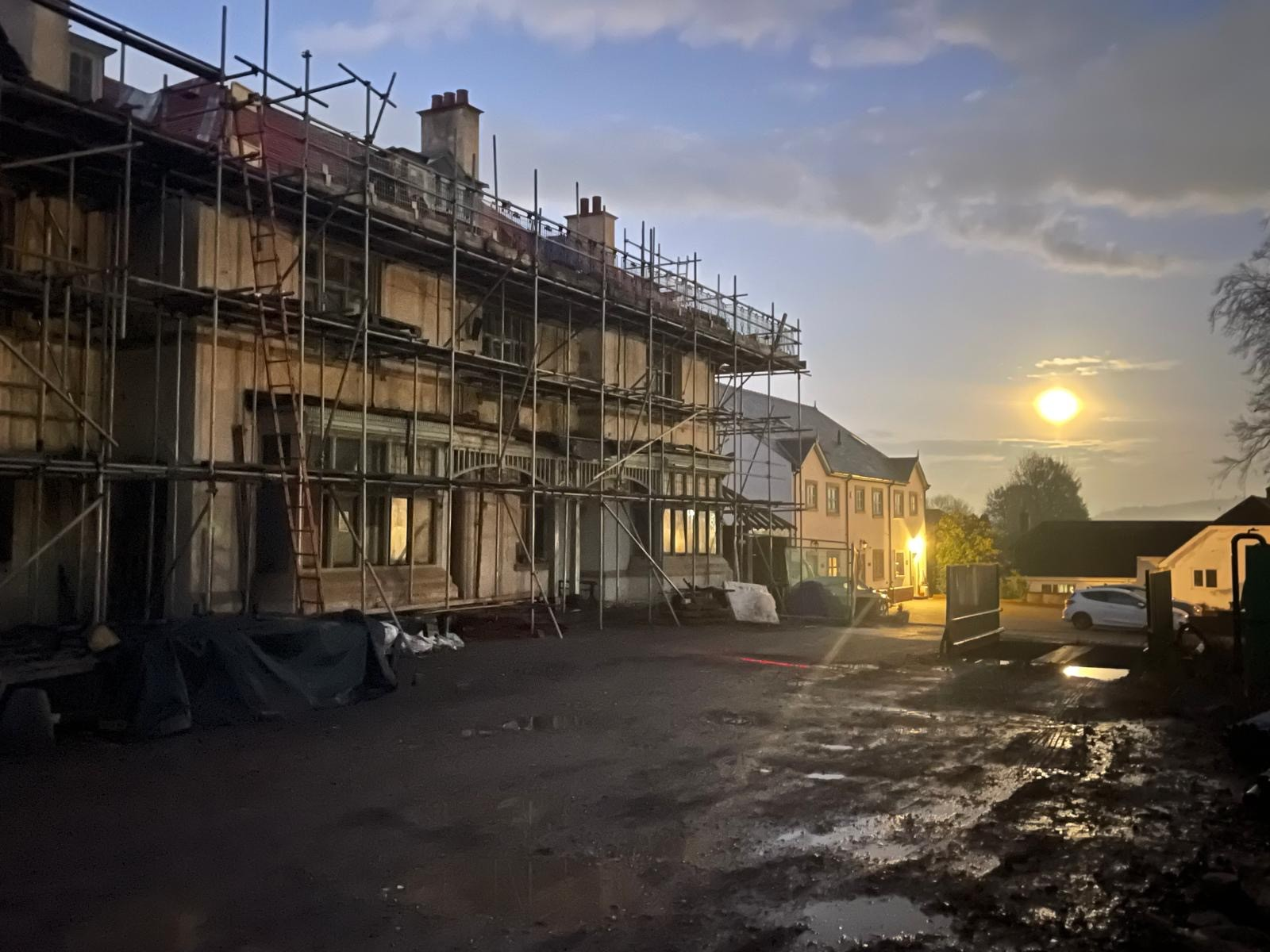
Coed Parc — from the 1909 sale particulars
The Restoration
Repairing the past.
Building the future.
Coed Parc has survived more than 125 years of changing ownership, changing uses and changing fortunes. Over time, parts of Coed Parc had badly deteriorated, putting the building's historic fabric at risk.
The restoration now underway is an opportunity to address those issues and carefully repair the building, using specialist knowledge and traditional skills.
And this is where the next chapter begins.
Repair
Where historic fabric can be repaired, the intention is to repair it.
Retain
Where original features survive, they should be protected.
Respect
Where replacement is unavoidable, it should be approached carefully and sympathetically.
The aim is to ensure that the character of Coed Parc survives for generations to come.
Follow the Restoration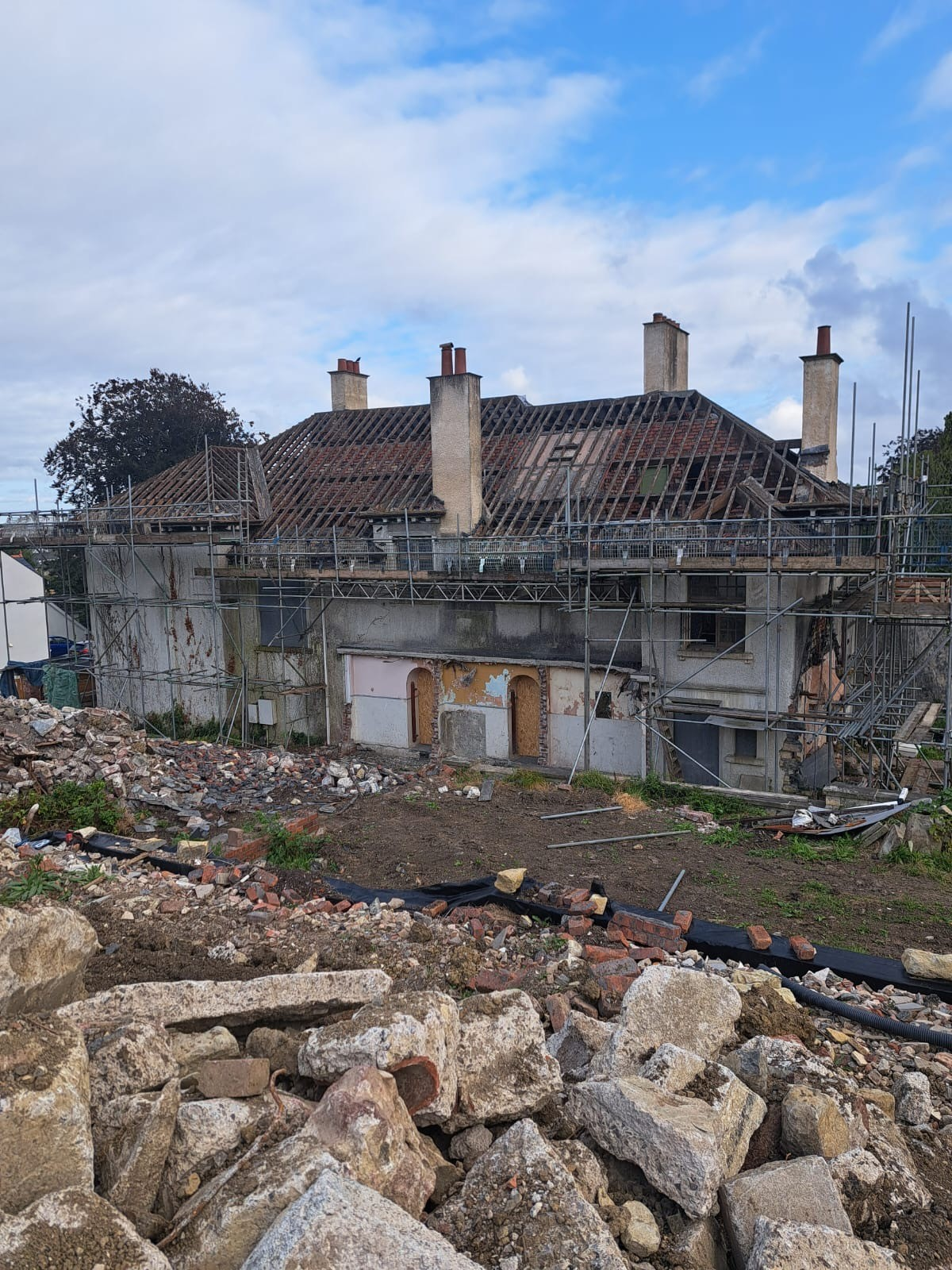
Photo No 4 — Coed Parc with scaffolding during the restoration programme
Follow the Restoration
A journey of discovery
Restoring a building like Coed Parc is a journey of discovery. As work progresses, the building reveals more of itself — sometimes confirming what we already know, and sometimes presenting unexpected challenges and fascinating details that could not have been seen until the work began.
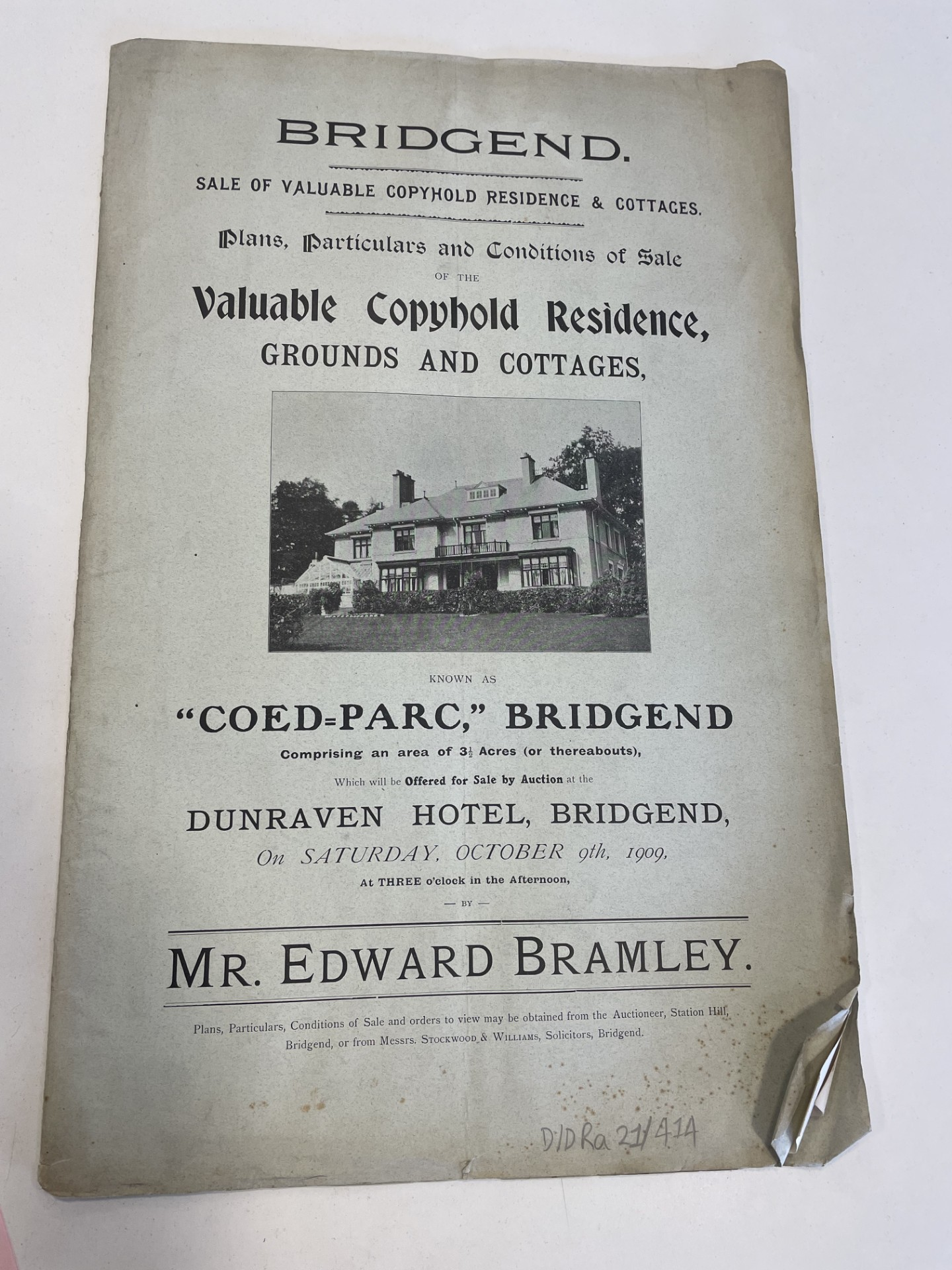
With scaffolding now surrounding the house, the restoration of the roof is underway and Coed Parc is beginning to take on a new appearance.
But this is not about making the building look new. It is about repairing, protecting and bringing back to life the building that has been here for more than 125 years.
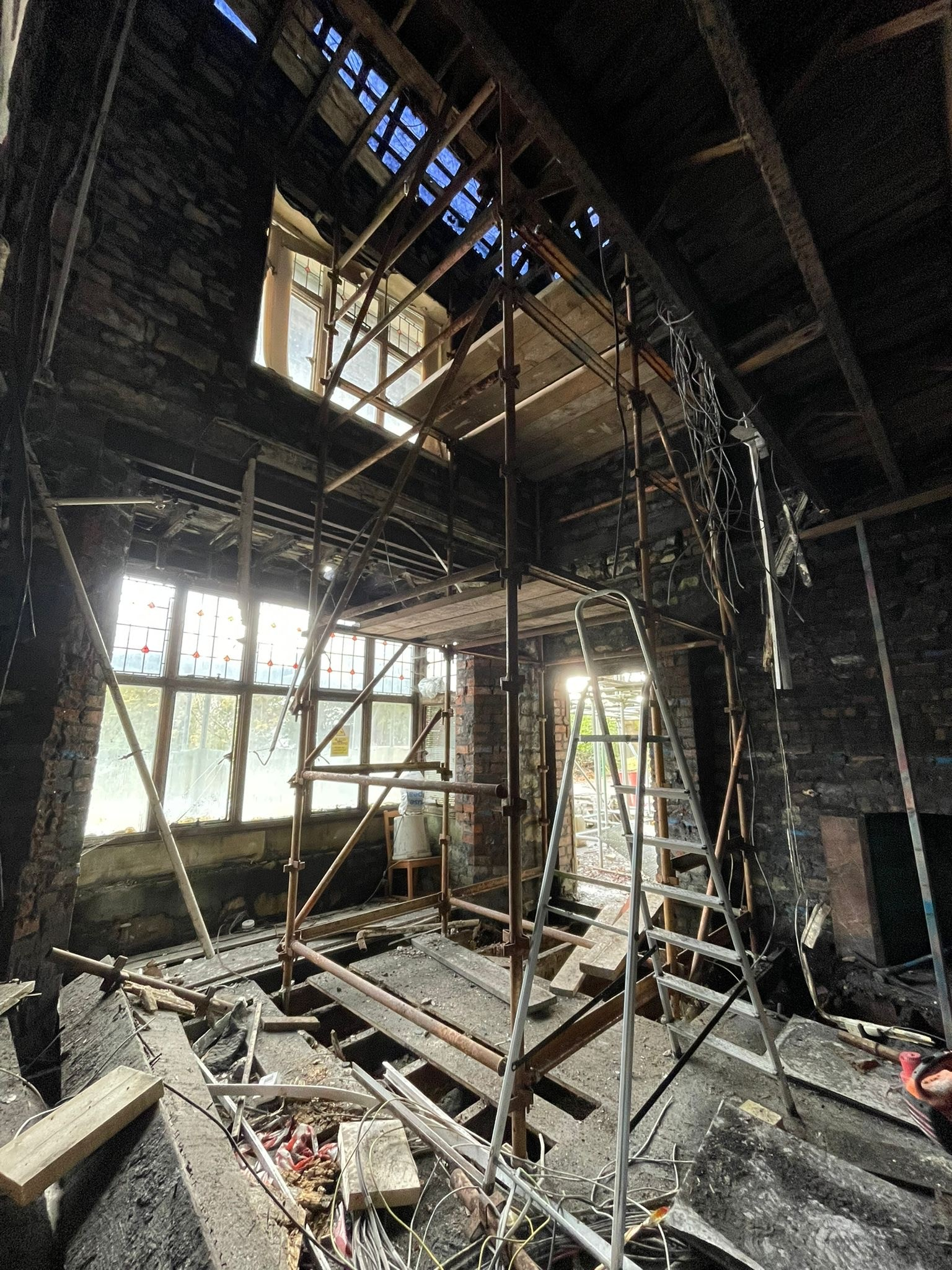
Interior scaffolding in place as restoration work gets underway inside Coed Parc.
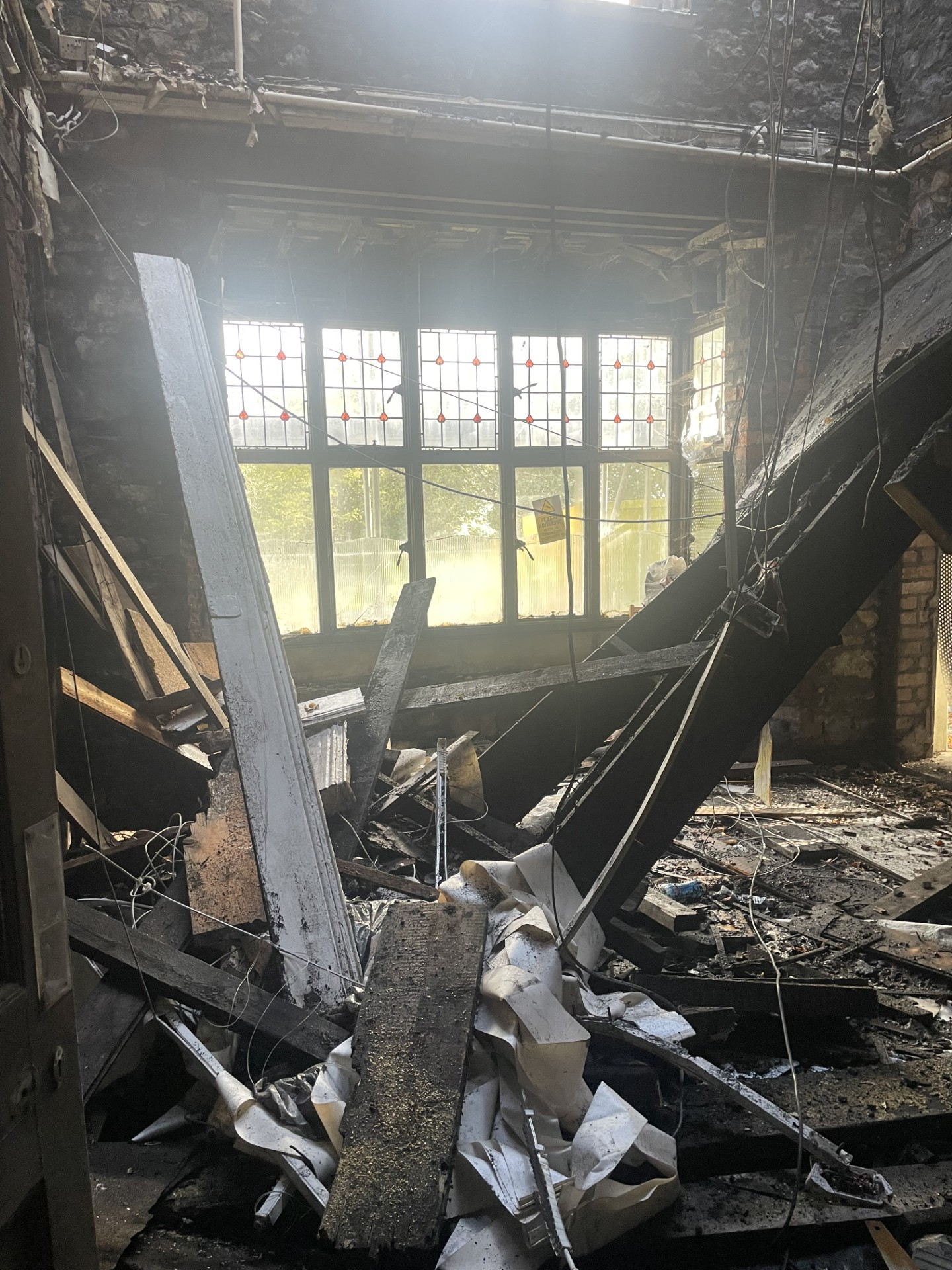
Damage to the interior fabric of the building, including original features requiring specialist attention.
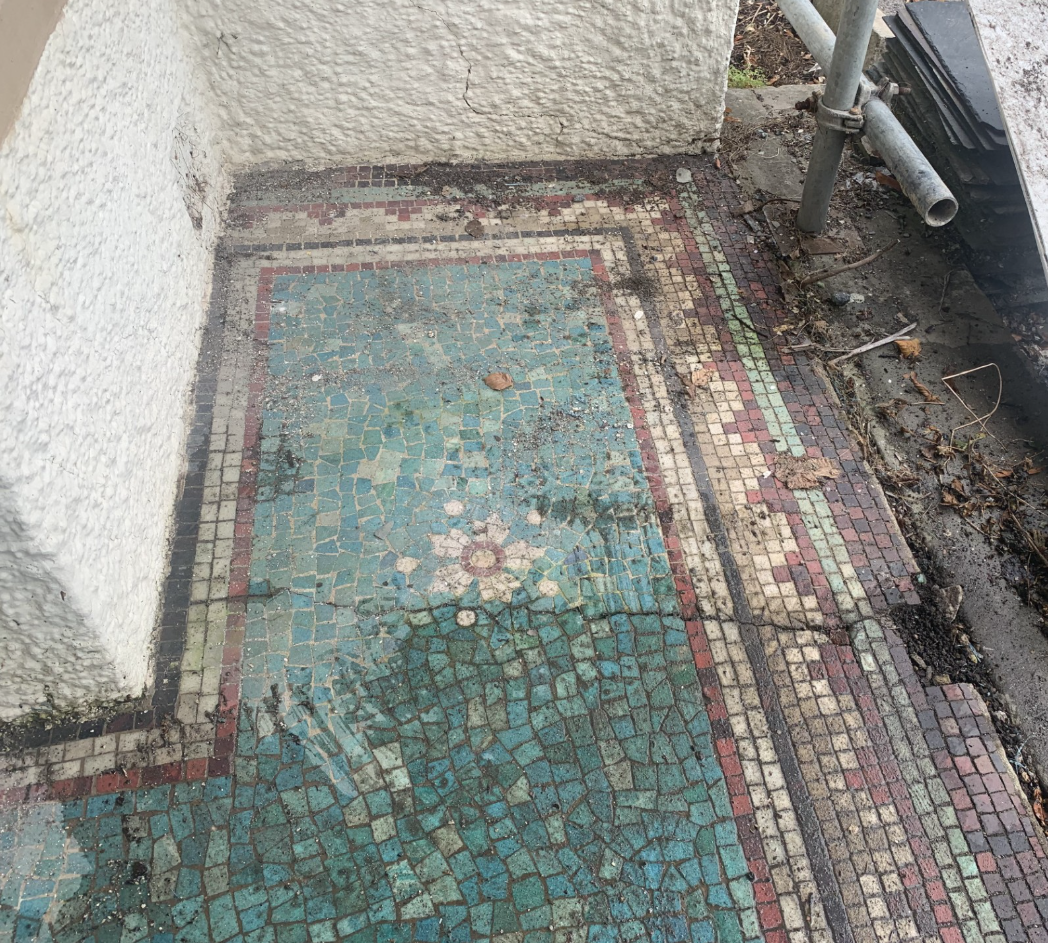
Photo No 7 — Restoration work in progress at Coed Parc
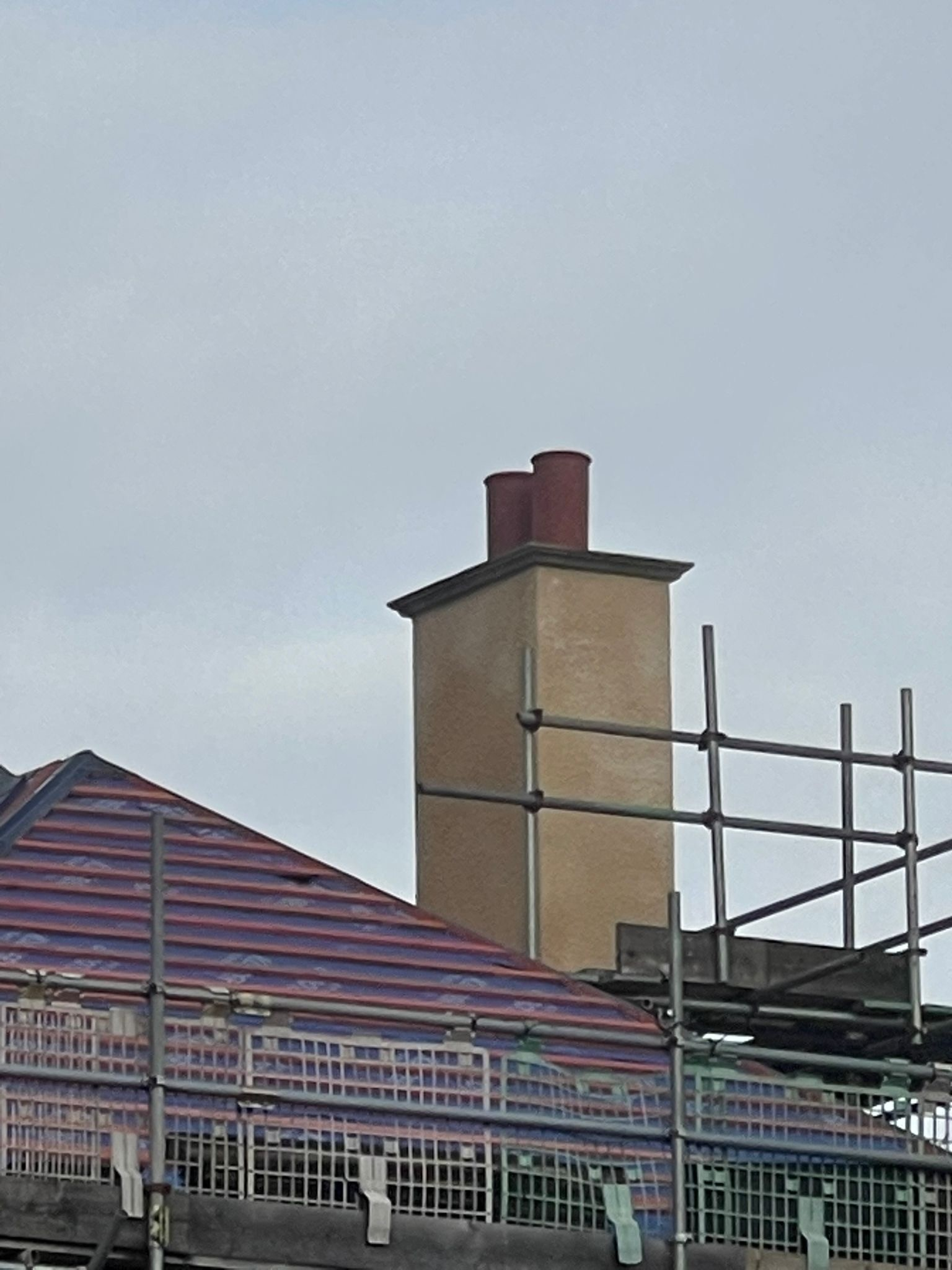
Photo No 8
The chimney rebuilt
A Chimney Rises Again
Restoring what was lost
One of Coed Parc's historic chimneys had previously fallen, leaving a significant gap in the original roofline and an important part of the building's character at risk.
As part of the restoration, the chimney has now been carefully rebuilt, restoring this distinctive feature and helping to protect the roof and structure beneath it.
The work required careful attention to the original form and materials so that the rebuilt chimney sits naturally within the historic roofscape.
Seeing the chimney rise again is an important early milestone in the restoration.
A Team of Specialists
Restoring Coed Parc is a collaborative process
It brings together people with different areas of expertise, all working towards the same objective: to protect and restore an important historic building.
Architects
Initiate Architecture, Bridgend
Ross Hartland and the team at Initiate Architecture have developed a thoughtful, ambitious and genuinely conservation-led vision for the restoration of Coed Parc. Their approach combines a deep respect for the building's history with a clear vision for creating a sustainable future for it.
A key part of their philosophy is to work with the existing building rather than against it — understanding how it was originally constructed, respecting its materials and allowing its history to inform the decisions being made today.
The team has placed particular emphasis on using sustainable, appropriate and sympathetic materials, ensuring that new work complements the historic fabric of Coed Parc rather than competing with it.
What has been particularly valuable to us is the level of personal commitment Ross brings to the project. He continues to make regular site visits and remains actively involved throughout the restoration, taking the time to look closely at the building, discuss issues as they arise and work with the wider team to find the right solutions.
That hands-on involvement is incredibly important when working with a building as complex and individual as Coed Parc. Historic buildings often reveal something unexpected once work begins, and having an architect who is engaged, approachable and willing to work through those challenges on site makes a real difference.
Initiate's vision is not simply to return Coed Parc to a particular moment in its history. It is to understand everything the building has become, preserve what makes it special and carefully shape its next chapter.
We are incredibly grateful to Ross and the whole team at Initiate Architecture for the expertise, enthusiasm and commitment they are bringing to Coed Parc.
A shared vision for preserving the past and creating a sustainable future.
Structural Engineer
Spark Structures
Lloyd Evans of Spark Structures brings specialist structural engineering expertise to the restoration of Coed Parc, with a focus on understanding the building as it stands rather than treating it as a modern structure.
Working alongside the architectural and conservation team, Lloyd is helping to unravel how Coed Parc was originally constructed, how it has evolved over more than a century and how its historic structure can be carefully repaired and strengthened.
For a listed building, structural intervention needs to be considered with particular care. The aim is not simply to make the building structurally sound, but to achieve this while retaining as much of the original fabric and character as possible.
The approach is an important part of the wider conservation philosophy at Coed Parc — finding practical and sympathetic solutions that respect the building's history while giving it the strength and stability it needs for the future.
Timber Specialist
Demaus Building Diagnostics Ltd
Robert Demaus brings specialist expertise in historic timber, building diagnostics and damp, helping the restoration team understand how Coed Parc's traditional construction has performed over more than a century.
His work involves looking beyond the visible signs of deterioration to understand what is happening within the building — particularly where moisture, ventilation and the condition of historic timber interact.
This specialist knowledge is essential when working with an historic building. Timber that may initially appear damaged or beyond repair can sometimes be carefully conserved once the underlying cause of the problem has been understood and addressed.
Robert's detailed assessments help the team make informed decisions about what can be repaired, what should be retained and where intervention is genuinely necessary.
This reflects one of the central principles of the Coed Parc restoration: Don't replace what can be repaired.
By understanding the building's traditional materials and how they work together, the aim is to preserve as much of Coed Parc's original fabric as possible while ensuring that it remains healthy and resilient for the future.
Conservation Officer — Bridgend County Council
Moira Lucas
Moira Lucas brings specialist conservation knowledge to the restoration of Coed Parc, helping the team understand and protect the qualities that make the building such an important part of Bridgend's heritage.
Her role is particularly valuable in ensuring that decisions made during the restoration are informed by the building's architectural character, historic fabric and significance, while still allowing Coed Parc to have a practical and sustainable future.
We greatly value Moira's knowledge, opinion and input throughout the project. Her thoughtful and constructive approach has been particularly important when considering how best to balance conservation with the practical challenges of restoring a building that has evolved over more than 125 years.
Just as importantly, her approachability and willingness to engage with the project team has made her an invaluable part of the restoration. Being able to discuss ideas openly, consider different approaches and work towards the best solution for the building is hugely important on a project of this nature.
Her involvement helps ensure that the building's special character remains at the heart of the restoration, while allowing Coed Parc to evolve and have a sustainable future.
Protecting the past, understanding the present and creating a future for Coed Parc.
Roofing, Heritage Craft and Conservation
AGA Conservation
Angelo Aviles of AGA Conservation brings specialist experience in heritage roofing, traditional construction and conservation craftsmanship to the project. The team's understanding of historic materials and techniques is particularly valuable when working on a building of Coed Parc's age, where preserving the original construction is as important as ensuring the roof performs well for the future.
Wherever possible, we are retaining and reusing the original green Delabole slates that have formed part of Coed Parc's roof for generations. Where additional slates are needed, we are carefully sourcing reclaimed Delabole slates that closely match the originals in colour, size, thickness and age. This ensures that any new material blends naturally with the existing roof, preserving both its appearance and its historic character.
The construction of the roof itself presents a fascinating specialist challenge. Coed Parc features hand-crafted mitered hips, a highly skilled traditional roofing detail where the slates meet precisely at the corners without the use of a conventional hip covering.
These details require considerable skill, accuracy and an understanding of traditional roofing methods. They are an important part of what gives Coed Parc's roof its distinctive character and are being treated as an integral part of the building's heritage.
The approach is therefore not simply to make the roof weather-tight, but to understand, repair and preserve the craftsmanship that went into creating it in the first place.
Angelo and the team at AGA Conservation are bringing specialist knowledge, traditional skills and genuine care to this important part of the restoration.
Original materials. Traditional craftsmanship. A roof built to last.
Community
Do you have a Coed Parc story?
Perhaps you remember the library? Perhaps your parents or grandparents worked here? Perhaps you have an old photograph tucked away in an album? Please get in touch and be part of the story.
Photographs
Old photographs of the house, inside and outside, grounds, gardens, outbuildings or people connected with Coed Parc.
Memories
Personal recollections of visiting, working at or living near Coed Parc.
Documents
Letters, plans, sale particulars, newspaper cuttings, programmes or other historic material.
Library Memories
Stories from the years when Coed Parc was associated with the Mid Glamorgan County Library Service.
Wartime Memories
Information about the building's use during the Second World War.
Industrial History
Stories, photographs or documents relating to Richard Thomas & Baldwin and the building's connection with the steel industry.
Even a small piece of information can help us connect the dots and build a better picture of Coed Parc's past.
The Future
Tŷ Coed Parc
Giving the house its own identity
As Coed Parc enters this new chapter, we would like to give the historic house a name that reflects both its heritage and its place in Wales. We propose to call the house Tŷ Coed Parc.
Tŷ is the Welsh word for house, and using the Welsh name feels like a fitting way to recognise the building's place within the local community and the wider cultural landscape of Wales.
For more than 125 years, the house has been known simply as Coed Parc. But as the wider site develops and new homes are introduced around it, we feel it is important that the historic house retains a distinct identity and status of its own.
Tŷ Coed Parc will be the name we use to distinguish the original Grade II listed house from the surrounding development — making clear that this is not simply another property on the site, but the historic heart of Coed Parc.
The name also reflects our wider approach to the restoration. We are not trying to create a new identity for an old building. We are trying to recognise, protect and celebrate the identity it has always had.
As the surrounding site changes and grows, Tŷ Coed Parc will remain at its centre — a reminder of where the story began in 1899 and of the generations of people who have lived, worked and spent time here.
Our ambition is…
- —To save what is special.
- —To restore what can be restored.
- —To celebrate the people and skills that make it possible.
- —And to ensure Coed Parc has a future.
Get Involved
Get in touch
You don't need to create an account to get in touch. Use this form to share information, ask a question or express interest in the project.
If you have a Coed Parc story to share publicly, please create an account and use the Story Submission form.