
The History
A house with more than
125 years of stories
Coed Parc was built in 1899, at a fascinating moment in British architectural and social history.
The house reflects the Arts and Crafts and Art Nouveau influences of its time, with distinctive architectural details, substantial gardens and a character that makes it instantly recognisable.
But the history of Coed Parc is about much more than its architecture.
Over the decades, the building has changed hands, changed purpose and adapted to a changing world. Each chapter has left its mark.
A House With More Than 125 Years of Stories
The History of Coed Parc
The Beginning
Coed Parc was built in 1899 for Samuel Llewellyn. The house was constructed as a substantial residence within its own grounds, with gardens and associated buildings forming part of the wider property.
Its architecture reflects the craftsmanship and design of the period, with decorative timberwork, large windows, distinctive rooflines, chimneys and other features characteristic of a late Victorian house influenced by the emerging Arts and Crafts movement. The building that stands today retains many of those qualities.
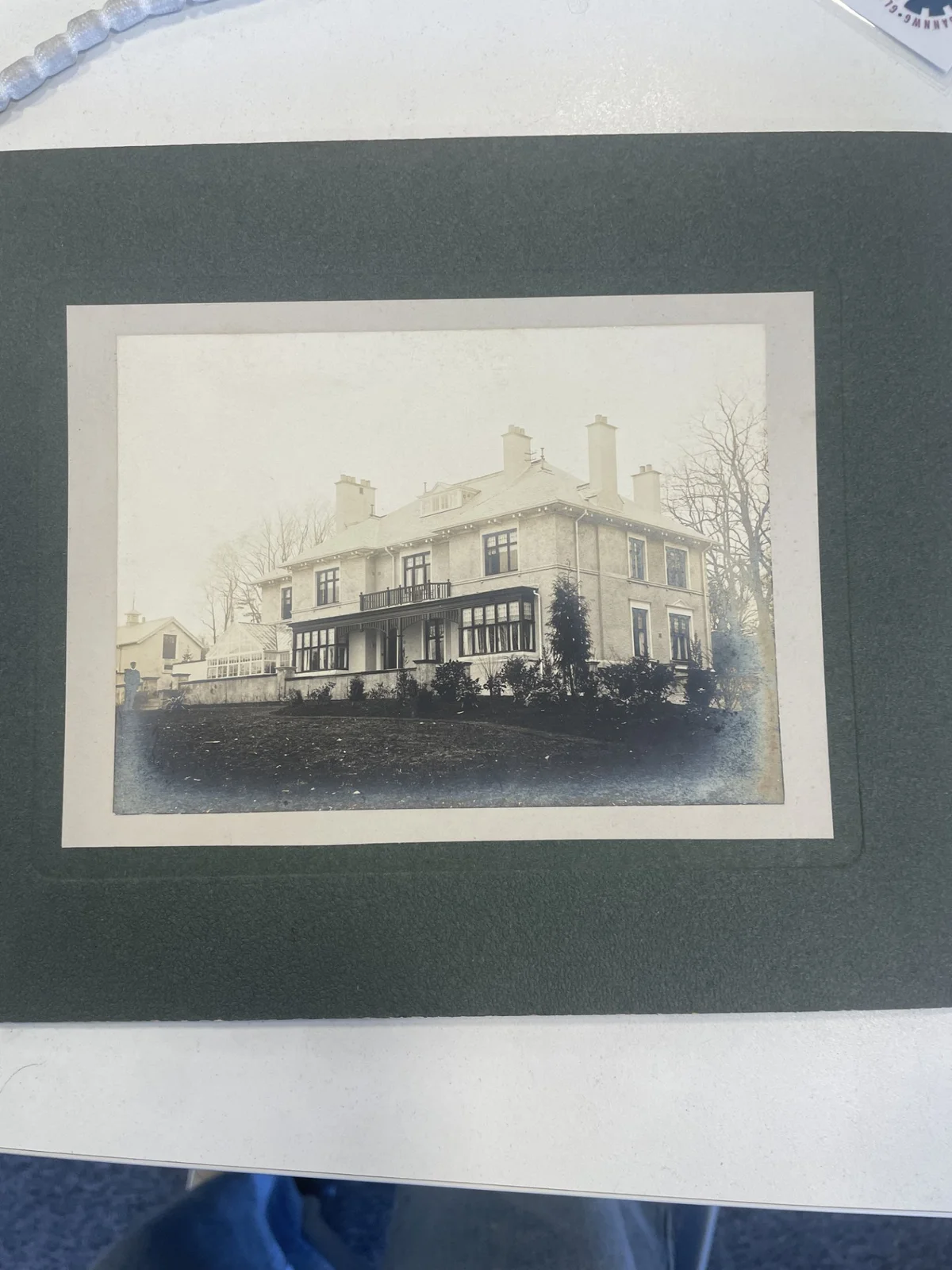
Coed Parc, c.1899 — the original house
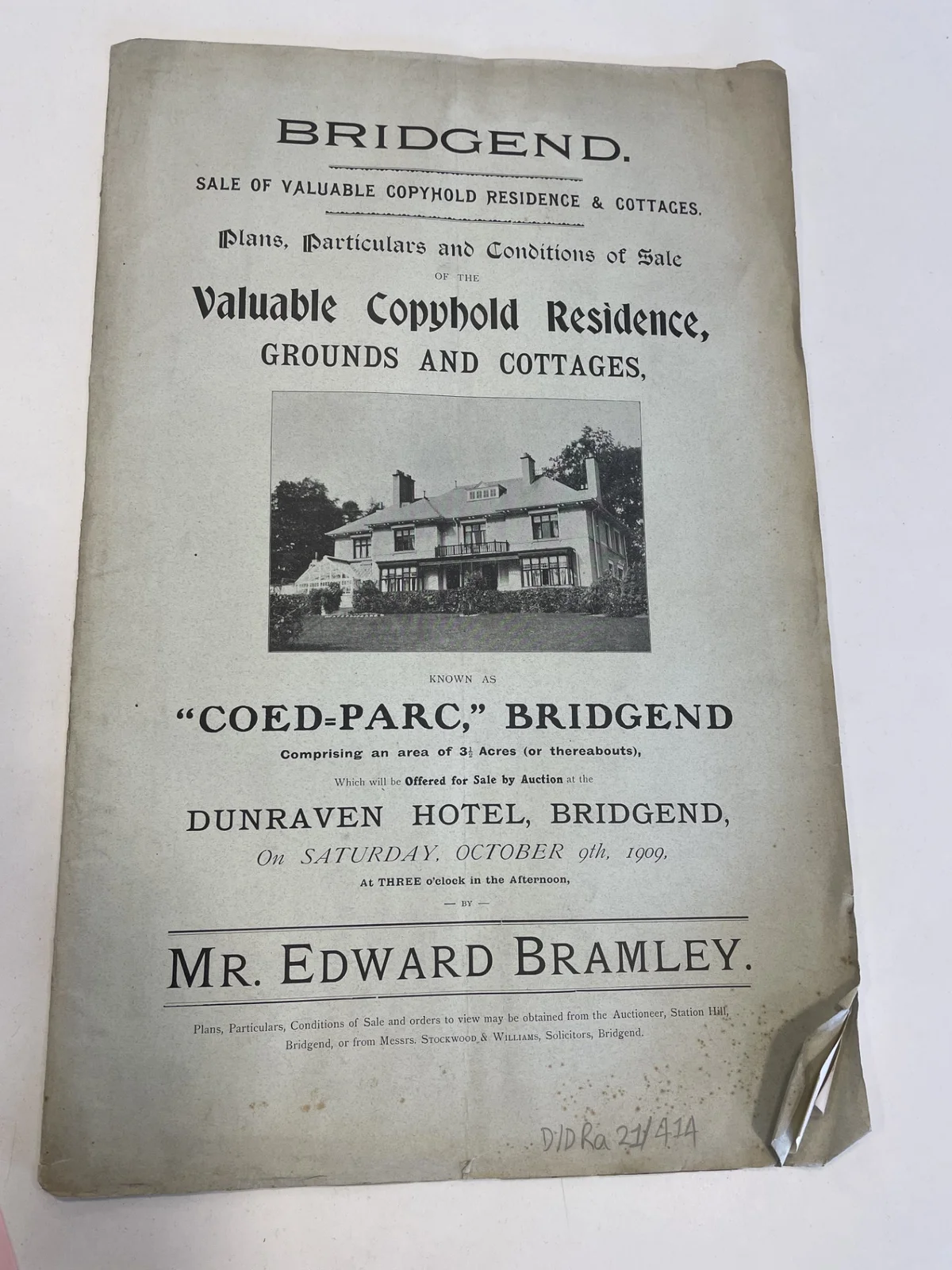
Original sale particulars, 1909
Coed Parc Goes to Auction
One of the most exciting pieces in the Coed Parc archive is a set of original 1909 sale particulars. Ten years after the house was built, Coed Parc was advertised as a "Valuable Copyhold Residence, Grounds and Cottages."
The particulars describe the property as extending to approximately 3½ acres and record that it was to be offered for sale by auction at the Dunraven Hotel, Bridgend, on Saturday, 9 October 1909. The surviving document gives us a fascinating glimpse into how Coed Parc was described at the beginning of the twentieth century — showing the main house, its distinctive veranda, the adjoining greenhouse and the landscaped grounds.
More Than a House
Coed Parc was never simply a house. Its grounds were an important part of the estate. Historical research has identified a number of features associated with the site, including a coach house, driveway and lawn, plantation, walled kitchen garden, garden and paddock.
The historic photographs also reveal how closely the house was connected with its gardens and productive landscape.
Coed Parc at War
The Second World War brought another major change to the life of Coed Parc. In 1939, the house ceased to function as a private residence and was used as a military headquarters.
The building therefore became part of the wartime story of Bridgend.
The Steel Industry Arrives
After the war, Coed Parc entered another fascinating chapter. In 1947, the property was purchased by Richard Thomas & Baldwin Ltd, connecting the building with one of the defining industries of twentieth-century South Wales — steel.
Coed Parc became associated with the company's architectural work and its development of the Spencer Steelworks at Llanwern. The building therefore became part of a much bigger story: the transformation of South Wales through industrial development.
A Place of Books and Knowledge
Coed Parc later became associated with the Mid Glamorgan County Library Service. For many local people, this is the Coed Parc they remember.
The building became a place of books, research, learning and local knowledge — a role which feels particularly appropriate for a building that is now helping us uncover its own history.
Grade II Listed
Coed Parc was designated a Grade II listed building in 1986, recognising its architectural and historic importance. That heritage is found not only in the overall structure of the house, but also in the smaller details that give the building its individual character.
Some of these features have survived and are important to preserve. The original mosaic tiling outside the building, for example, forms part of Coed Parc's historic fabric and is something we are committed to carefully restoring and protecting.
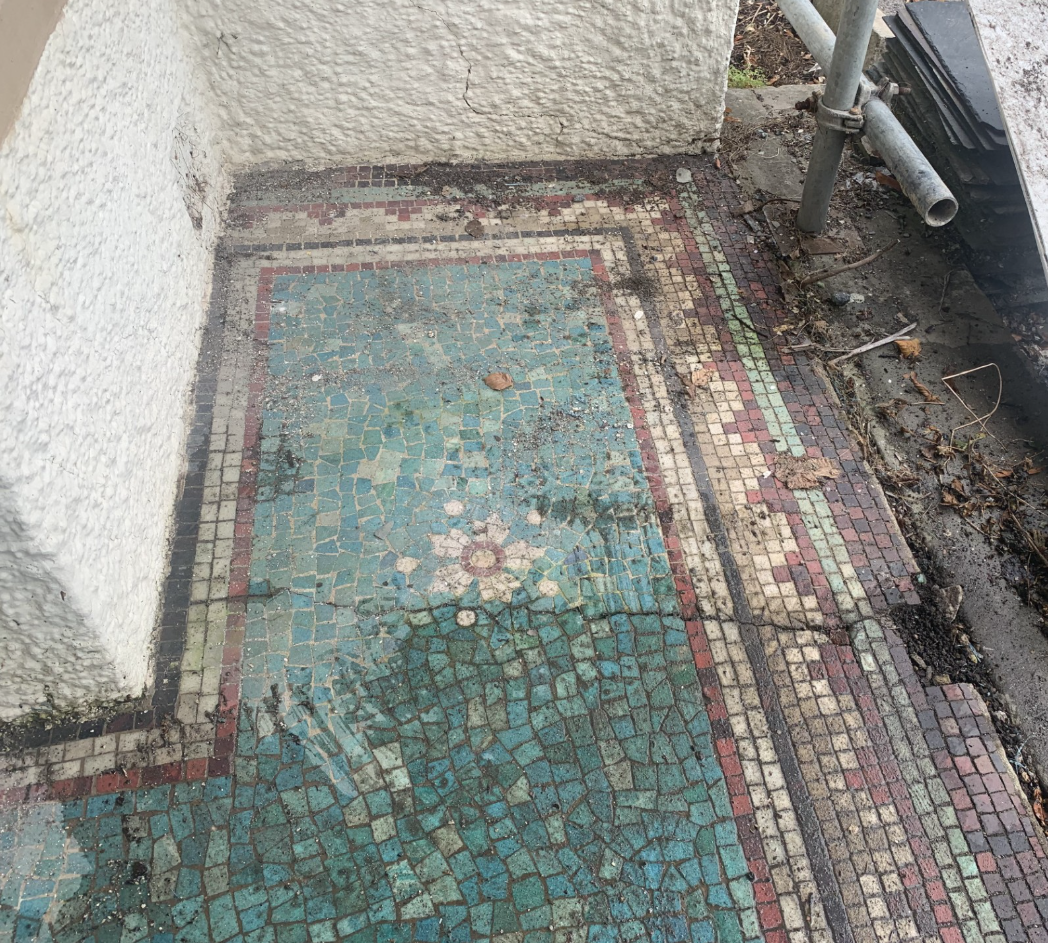
Original mosaic tiling — a listed feature
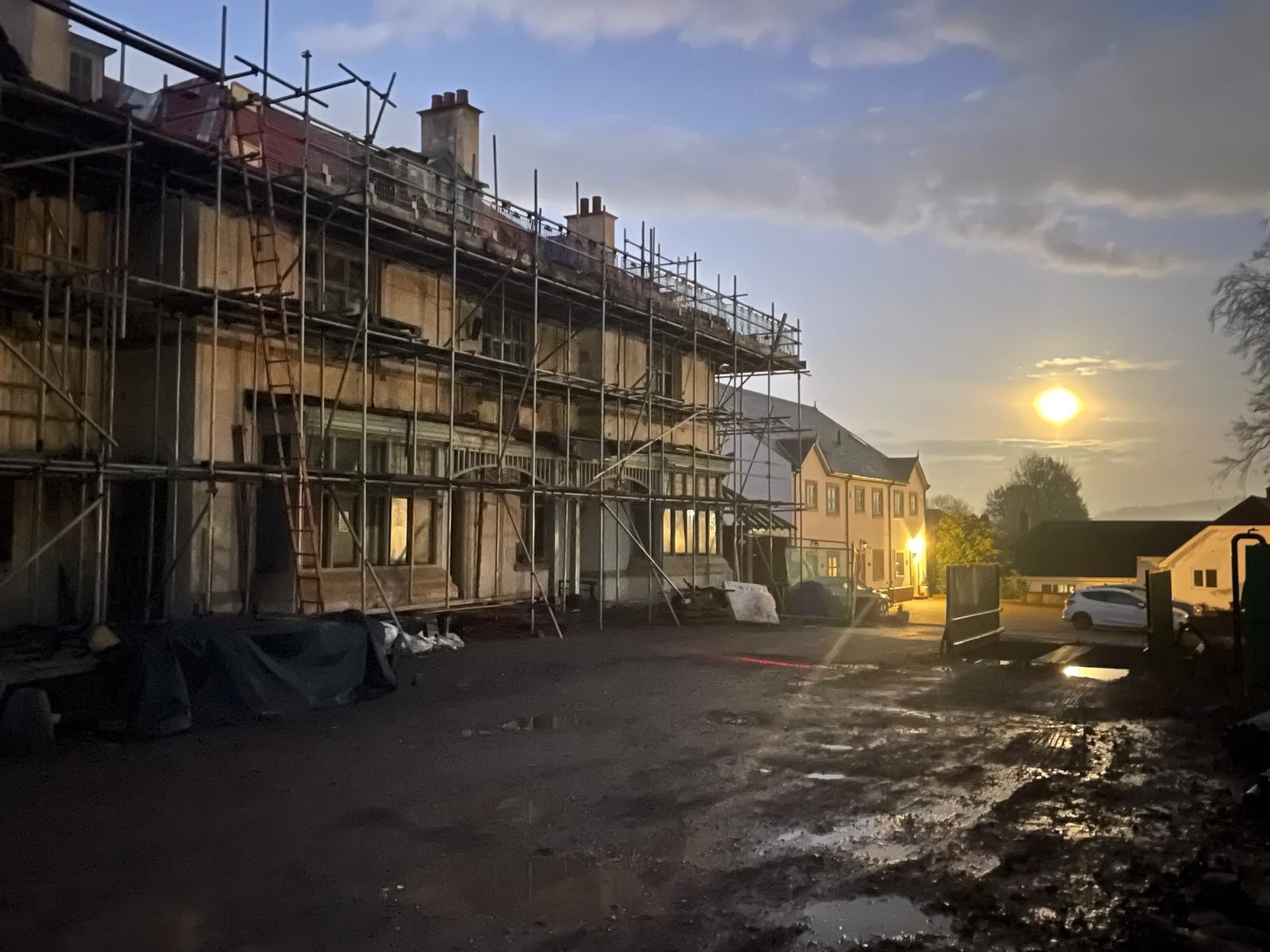
Restoration underway — scaffolding in place
Repairing the Past
Over time, parts of Coed Parc had badly deteriorated, putting the building's historic fabric at risk. The restoration now underway is an opportunity to address those issues and carefully repair the building, using specialist knowledge and traditional skills.
With scaffolding now surrounding the house, the restoration of the roof is underway. This is not about making the building look new — it is about repairing, protecting and bringing back to life the building that has been here for more than 125 years.
Historic Details
The details that tell the story
Coed Parc was designated a Grade II listed building in 1986, recognising its architectural and historic importance. That heritage is found not only in the overall structure of the house, but also in the smaller details that give the building its individual character.
Some of these features have survived and are important to preserve. The original mosaic tiling outside the building, for example, forms part of Coed Parc's historic fabric and is something we are committed to carefully restoring and protecting.
Sadly, over the years, many of the beautiful original details within the building have been lost. Original fireplaces, door furniture, handles and other fittings have been removed, leaving gaps in what was once a richly detailed interior.
Where original features have disappeared, we want to reinstate them wherever we can, using like-for-like replacements that are sympathetic to the period, style and craftsmanship of the original building. Every surviving detail matters, because together these small features help tell the story of the building and the people who created it more than 125 years ago.
Photo No 9
Original mosaic tiling
Grade II Listed — 1986
Coed Parc's designation as a Grade II listed building recognises its architectural and historic importance. The listing helps protect the building and its character for future generations.